 |  |
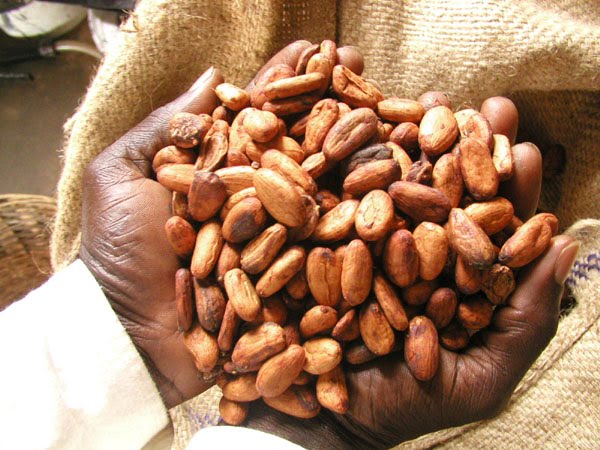
Opened cacao fruit (Photo: iStockphoto) Cacao beans ready for fermentation (Grenada)
Fermentation of Cacao
The cacao fruits are opened and the pulp and seeds are transferred to larger containers. This is either performed by farmers, plantation workers, or in large cocoa factories where it can be done by machines.
The cacao beans are later transferred to wooden crates or baskets with banana leaves in between and on top to enable an optimal fermentation. The duration of the fermentation depends on the variety and is from 2 to more than 7 days. The length of the fermentation also affects the aroma, so if well-developed aroma is wanted the beans are fermentation for a longer time.
The fermentation process transforms the flavor to what we associate with cocoa and chocolate. Without the fermentation process there will not be any chocolate flavor. The Netherlands (20.6%), the United States of America (18.5%), Malaysia (10.8%), Germany (8.3%), Belgium (6.0 %), France (4.7%), the United Kingdom (4.2%) and Spain (2.4%) are the largest importers of cocoa beans. Barry Callebaut competes with Cargill and ADM in Africa and Asia for the two annual harvests of the cocoa bean, processing 15% of the globe's entire cocoa production. Cocoa and chocolate products supplier Barry Callebaut [with processing operations in other major cocoa growing countries such as Ghana, Cameroon, Brazil and Malaysia] has confirmed reports that it plans to upgrade grinding capacity at one of its cocoa processing plants in Ivory Coast from 105,000 to 175,000 tons a year. The Netherlands continues to be the world’s largest Cocoa bean processor.
 | More on Cocoa Beans
Ivory Coast or Côte d’Ivoire is the world's largest producer and exporter of cocoa beans and a significant producer and exporter of coffee and palm oil. On July 6, 2011, the wholesale cash price for Ivory Coast's cocoa beans was $3,364 per metric ton in New York. Ivory Coast harvests its main crop from Oct. 1 to March 31, while a smaller mid crop is gathered from April to the end of September. The world's top grower, recovering from a violent post-election power struggle, will allow export batches to contain a maximum of 125 cocoa beans per 100 grams, from 105 beans per 100 grams. "Due to exceptional circumstances, and to reflect the conditions of the mid-crop, a bean count of 125 per 100 grams will be allowed for the period from June 15 to September 30, 2011," according to a statement from industry regulator BCC. As part of new World Bank reforms linked to loans, the new Ivorian president is expected to overhaul the industry with a return to centrally fixed prices. He has discussed guaranteeing an amount paid to growers for their beans set at 50% of the global price. The World Bank has also urged a reduction in government taxes, which weigh on the price merchants pay. Meanwhile, Ghana's prices which are set at the beginning of each season, remain high, drawing smugglers. Ghana, the world's second-biggest grower behind Ivory Coast, is projecting its highest harvest on record. Output for the season ending in October is projected to rise 30% to 825,000 metric tons, according to the International Cocoa Organization, which groups producing and consuming countries. But Ghana cocoa officials deny the increase is linked to smuggling. |
